
How locals describe Las Vegas
Ask someone where they live in Las Vegas and they'll tell you an intersection. "We're off Charleston and Rancho." "East side, near Nellis." "By the 215, out past Rainbow." The city proper doesn't have the named master-planned communities that define Henderson or Summerlin — no Green Valley Ranch, no Anthem, no Inspirada. What it has is a grid: a 50-year layering of residential build-out organized by cross-streets, each corridor with its own era, its own housing stock, and its own seller profile.
That's what this page covers. Las Vegas city proper — not Henderson, not North Las Vegas, not the unincorporated townships of Spring Valley or Enterprise that share the 89100-series ZIP codes. The homes in this city range from 1950s mid-century ranches in Twin Lakes and the Rancho corridor, to 1970s–1980s tract homes in Charleston Heights and the west side, to 1990s–2000s stuccos in the northwest. The east side has its own character entirely — older, more affordable, shaped by Nellis AFB and Boulder Highway in ways the west side isn't.
One thing worth knowing: several ZIP codes with Las Vegas city addresses — 89134, 89135, 89138, 89144 — function as Summerlin. If you're in those ZIPs, the Summerlin page covers your area more specifically. Similarly, the 89119 and 89120 ZIPs around Pecos and Sunset sit in Paradise (unincorporated Clark County) on the Henderson border — we cover that zone here, but the address often reads "Las Vegas" even though it's technically outside the city limits.
The older midtown corridors
The city's original residential grid runs along Charleston Blvd, Sahara Ave, and Rancho Drive — corridors built out in the 1960s and 1970s when Las Vegas was expanding west from downtown. These are the blocks where a 1,400 sqft ranch has had the same family for 40 years, where the garage is converted and the backyard is a project that never quite got finished. These homes have history, and the sellers who call us from this corridor almost always have a story to go with it.
The Charleston and Rancho zone centers on Twin Lakes — actual man-made lakes that serve as the neighborhood park — and the older Rancho Drive residential grid. Mid-century ranch architecture, smaller lots, no HOA in most of it. The Scotch 80s, just to the east, was where Las Vegas money lived before the suburbs expanded — the Rancho corridor is adjacent to that history without being part of it. Estate calls come from here regularly: adult children sorting out a parent's home that's been in the family since the early 1970s.
The Sahara and Decatur zone is one of the city's most mixed corridors — longtime owner-occupants alongside investor-held rentals, a large immigrant community, Chinatown a few blocks east on Spring Mountain Rd. Homes are mostly 1960s–1970s ranch-style, 1,200–1,800 sqft, affordable price points. Sellers here are often in their 70s and 80s, looking for a straightforward transaction: no showings, no repairs, no managing a tenant out before closing.
The Decatur and Desert Inn zone covers the mid-band of the older west-side grid — 1970s–1980s ranch product, close to the Meadows Mall, non-HOA in most of it. These are solid working-class blocks that don't get covered in the real estate press, but they represent a large chunk of the city's older ownership base.
The northwest expansion corridor
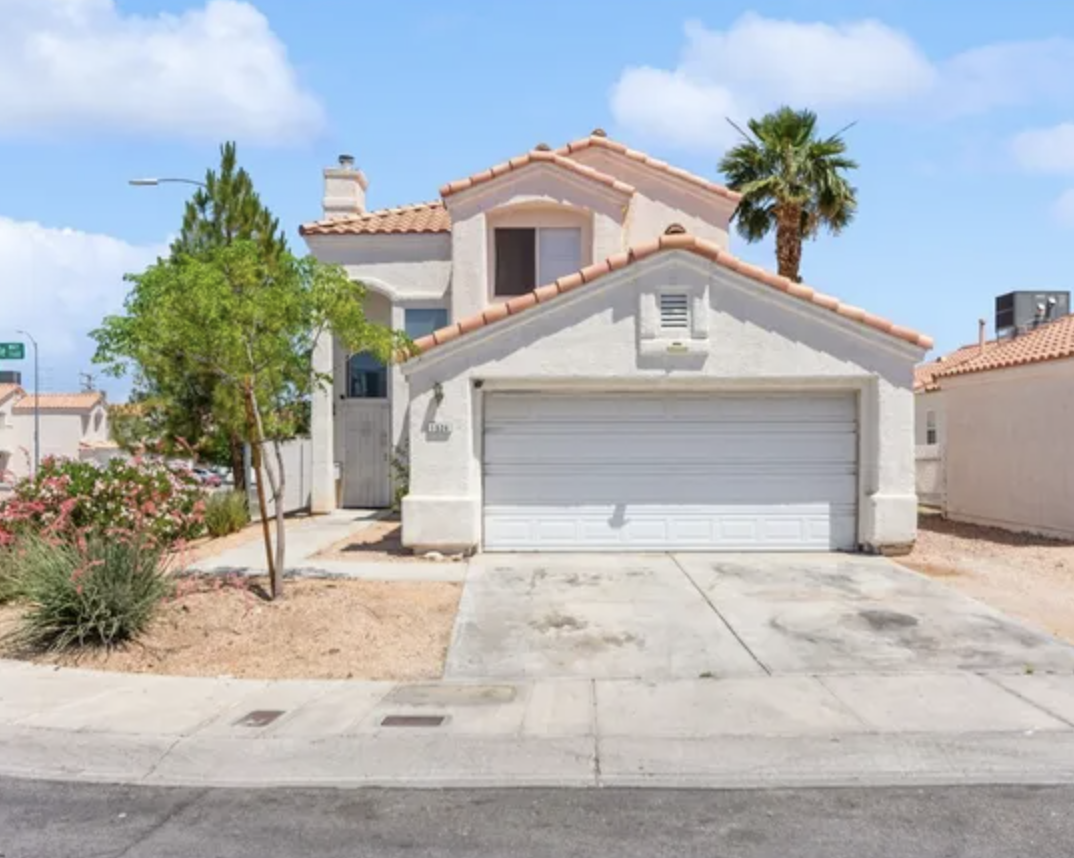
Las Vegas grew hard to the northwest in the 1980s through early 2000s, filling in the land between the older midtown grid and the Summerlin border. The result is a band of tract homes — 1,800 to 2,800 sqft stuccos with tile roofs, HOA-governed, built to the same floor plans across dozens of subdivisions — that stretches from the Rainbow and Lake Mead intersection up to the Lone Mountain area near Craig and Jones.
Craig and Jones is the heart of this zone: Lone Mountain Regional Park anchors the neighborhood, wide block-wall streets, two-car garages, the feel of a suburb that forgot it's inside a city limit. Sellers here are typically 2000s buyers — in their mid-40s to 50s now — navigating a relocation, an empty nest, or a divorce that requires liquidating an asset.
Rainbow and Lake Mead sits at the southern edge of this NW expansion zone, closer to the North Las Vegas border. Older product than Craig and Jones — 1970s–1980s rather than 1990s–2000s — with less HOA uniformity and more variety in condition. Longtime owner-occupants in their 60s and 70s are the most common callers from this zip.
Cheyenne and Tenaya fills the middle of the band — built in waves from the late 1970s through the 1990s, a mix of small apartments and three-bedroom SFRs, quiet and established. Desert Shores (a master-planned lake community) sits on the western edge; the Craig Road commercial corridor is the spine. Sellers here are often landlords who picked up a property when the prices were right and are now assessing whether to hold or exit.
Fort Apache and Charleston anchors the western edge of the pre-Summerlin build-out, adjacent to Peccole Ranch and Angel Park Golf Club. 1980s–1990s homes, some gated micro-subdivisions. The typical caller from this zone is a 1990s buyer now in their mid-60s thinking about a 55+ community or a move out of the valley — equity is usually strong.
The east side and the Nellis corridor
East Las Vegas has its own rhythm. Boulder Highway is the commercial spine; Nellis AFB shapes the entire eastern edge. Housing here is older and more affordable than the northwest — 1980s and 1990s ranch homes typically trading in the $300K–$420K range (median around $370K as of early 2026) — and the owner profile is distinctly different: active-duty and veteran families near the base, working-class homeowners in the Bonanza corridor, longtime owners in their 70s and 80s who bought when the east side was the affordable option.
Nellis and Sahara sits directly along the AFB perimeter. Active-duty renters, military families in owner-occupied homes, 1980s–1990s ranch product. The PCS-mover seller archetype is specific to this zone: a family gets orders to relocate, and they need to close on a defined timeline that the military sets, not the market. We hear that call regularly. We can close fast and we can buy occupied if there's a tenant in place.
Lake Mead and Nellis covers the north end of this corridor — slightly older inventory, heavier rental concentration, close to the Bonanza and Lamb corridors. Small landlords who bought during the 2012–2016 recovery years are common sellers here, often doing the math on whether to hold or sell given where rents and values have moved.
Lamb and Bonanza is one of the city's original working neighborhoods, east of downtown along Bonanza Road. Mixed-use blocks, modest homes on modest lots, 1970s–1990s construction. Sellers from this zone often have homes that would need work before going on the traditional market — we buy as-is, so the seller doesn't have to take on repairs or cleaning to close.
The Strip-adjacent western edge
The corridor west of the Strip — Jones Blvd, Rainbow Blvd, the Tropicana and Flamingo corridors into Spring Valley — has the highest rental concentration in the city. Casino workers, hospitality industry employees, and a large immigrant population make up a significant share of the resident base. Owner-occupants in these zones often bought in the 1980s or 1990s and have held through multiple economic cycles.
The Jones and Flamingo zone and the Tropicana and Rainbow zone both carry this character: dense renter-owner mix, 1980s–1990s stuccos and condo product, close to the Palms and Orleans casinos. The most common seller we hear from in these corridors is a small landlord with one or two properties — often an owner who bought as an investment, had the same tenant for years, and is now ready to exit. We can buy with the tenant in place, which is often the cleanest path: the seller doesn't have to give notice, the tenant doesn't have to scramble to move, and we close on whatever timeline works.
Blue Diamond and Buffalo is different — newer construction (2005–2012), larger homes (2,200–3,000 sqft), solar panels on many roofs, family-oriented. This is the SW edge of Las Vegas city proper near Mountain's Edge. Sellers here bought during the boom or post-crash recovery and typically have solid equity. Relocation and divorce are the most common reasons we hear from this zone.
Pecos and Sunset is the southernmost zone on this page — technically in Paradise (unincorporated Clark County) near the Henderson border, but sellers almost universally use "Las Vegas" as their address. Close to Sunset Park and Harry Reid Airport. 1980s–1990s family residential, with sellers who have often held for 25+ years.
Why sellers in Las Vegas call us
Sellers reach out for every kind of reason — and the mix in Las Vegas city proper reflects its diversity. Estate situations and inherited homes from the older east-side and midtown zones. Military families near Nellis AFB who need to close on PCS orders. Retiring landlords with one or two rentals in the Strip-adjacent corridors who have been managing the same properties for 15 years and want a clean exit. Divorce, financial pressure, foreclosure notices, code violations, homes that would need real work before a traditional listing makes sense — all of it lands in the inbox.
The retiring landlord call is worth naming specifically. A meaningful share of the investor-held housing in Las Vegas city proper — especially in the older east-side and west-of-Strip corridors — is owned by individual buyers who purchased one or two properties in the 1990s or early 2000s and have been managing them ever since. Some of these sellers want a quiet exit: they've had the same tenant for five or ten years and want to know the tenant won't be displaced when they sell. We buy occupied. The tenant stays, the lease stays, and the seller walks away without dealing with showings around an occupied home or coordinating a tenant move-out.
In the NW expansion zones — Craig and Jones, Cheyenne and Tenaya, Fort Apache and Charleston — the call is usually a lifecycle event: relocation, empty nest, divorce, a desire to cash out equity and downsize. These sellers have often been in the home for 15–25 years and have significant equity. The pitch here isn't about price; it's about speed and simplicity.
How we work in Las Vegas
We make one straightforward offer based on recent comparable sales and a realistic read on condition. No lowball followed by a renegotiation after inspection — the offer is the offer. If it works for you, we close on your schedule: as fast as a week for a seller who needs it done, or 45 days if you need time to find your next place. We handle back taxes, HOA payoff if applicable, and all closing costs on our side. You don't need to clean the house, make repairs, or coordinate anything around a tenant's schedule.
We buy houses in Las Vegas directly — no wholesaling, no assigning contracts to a third party. The close happens when you're ready, and it happens with our money.